
are you in a toxic relationship with your tarot cards?

hello, friends. i've been thinking a lot about how people talk to and about their tarot cards lately — and how the relationship that we have with our deck (and with divination in general) can shape the ways that we approach readings, interpretations, even magic.
is it time for you to have a relationship-defining talk with your tarot cards? is your connection with your cards healthy, toxic, or something in-between? do you find yourself constantly frustrated with, confused by, or even angry at your tarot cards? could you use some couples counseling with your deck, some real talk, some heart-to-hearts? or are you already in the process of building something really permanent, really lasting, something that can stand the test of time and change and growth and transition?
i'm cooking up a new lecture series on this very topic, and will have more details for you soon. (pssst — if you wanna save the date, the first one will be on november 22nd at 7pm eastern.) but for today, i want to offer you some food for thought when it comes to how you think about your cards, how you talk to your cards, and how you relate to your cards.
let's get into it.
what is a relationship?
a relationship is a state of being connected: whether by blood, by choice, by proximity, or by intention. we enter into relationships with hopes and expectations and desires, we navigate relationships through communication and shared experiences and growing intimacy, we define relationships through labels and boundaries (and sometimes hierarchies), and we may even declare relationships through ceremony or public initiation.
maybe when you think about relationships, you think about specific people in your life: your friends, your partners, your families, your neighbors, your coworkers. or maybe you think about categories of relationships: romantic, platonic, familial, community. maybe you think about marriage, or chosen family, or business partnerships. maybe you think about levels of intimacy, from very close to passing familiarity. or maybe you think about the kinds of relationships you don't have but long for, the kinds of relationships that feel out of reach or not possible for whatever reason.
some of the expectations and beliefs that we have about relationships are cultural, societal. these are the "shoulds" that some of us carry around relationships, the heteronormative milestones we may expect ourselves to reach at a certain point or the demands that we place on ourselves. things like marriage, children, maintaining connections with blood family at any cost: it's perfectly fine to want these things, to crave them, but it's also perfectly fine to not want them, to prefer something different, to make our own rules. we might expect our romantic relationships to follow a certain trajectory, expect our friendships to be reciprocal in specific ways, expect our business relationships to be mutually beneficial or adhere to a particular contract. and, also, we have to communicate those expectations, and make space for growth, discovery, and friction along the way.
when everyone in the relationship holds similar values or beliefs or expectations, it can be pretty seamless. if you make a friend who loves texting all day in the same ways that you do, or go out on a date with someone who is looking for the same kind of future that you want, or meet a new neighbor who wants to get involved in the same mutual aid groups that you're already participating in, it can feel really good and satisfying to lean all the way into those connections. but if you're an all-day-all-night texter and you realize that your friend rarely looks at their phone unless they have to, or you're really interested in having children and realize that the person you've been seeing for six months really does not want children, or your new neighbor keeps knocking on your door without warning and you'd really prefer that they told you when they were showing up, it can lead to frustration, conflict, or even the termination of the relationship.
not all of these things are dealbreakers. but they do require some curiosity, and communication, and adaptability, to work through and understand and figure out.
expectations around how relationships look and feel, and beliefs about what makes a relationship good and what makes it toxic, shape how we build intimacy, show up for each other, offer vulnerability, and deepen bonds. and if we enter into relationships without knowing what we actually expect (or without being able to respectfully articulate those expectations), it can feel like we're constantly getting disappointed by people, or like what we want doesn't exist at all.
you can actually probably have what you want in relationships, but you can't expect people to read your mind or to automatically be on the same page as you. you can't demand that people know you inside and out without you having to say a thing or lift a finger. and you have to acknowledge that other people also have their own expectations and desires, and that that's okay.
i'm talking about relationships between people here, but i'm also talking about the relationships that we can have with other things: with spirit, with ancestors, with deities, with magic.
and, of course, i'm also talking about the relationships that we have with tarot: with individual archetypes, but also with the deck as a whole.
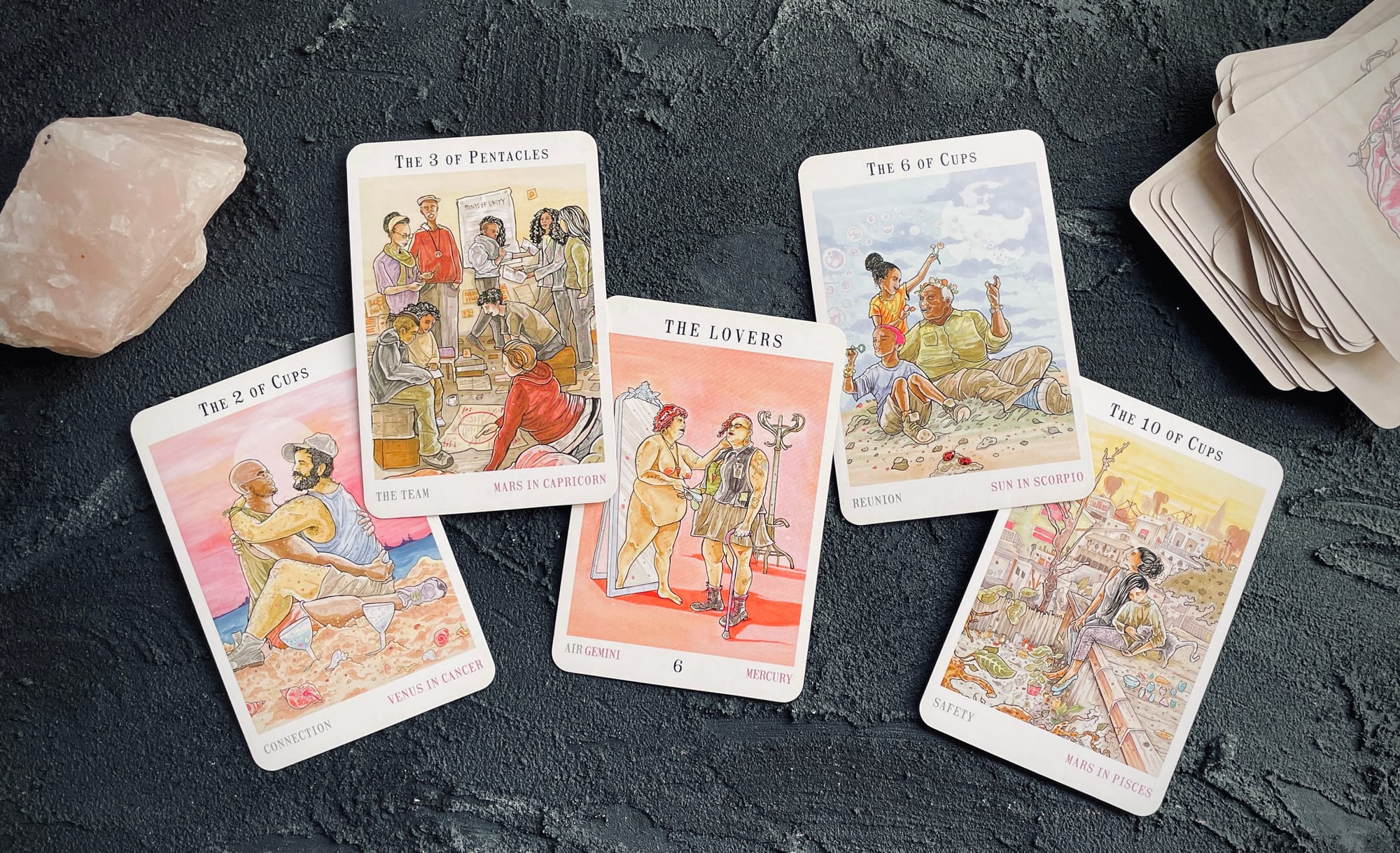
so with all of this in mind — what is your relationship with tarot? how do you define it, consider it, think about it, describe it?
maybe you think about your relationship with the tarot in terms of the role it fills in your life: friend, guide, mentor, teacher, disciplinarian, coach, critic. maybe you think about it in terms of an archetype it reminds you of: the priestess, the emperor, the hierophant, the devil, the tower, the star, the moon, the sun.
maybe you think about your relationship with tarot in terms of how it feels to engage with it: like you're laughing with a trickster spirit, like you're trembling at the feet of an all-knowing deity, like you're reverently accepting a gift or a prophecy, like you're eagerly digging into research at a library, or like you're joyfully communing with a loving ancestor.
or maybe you think about tarot in terms of results, or what the cards do for you: offer advice on specific situations, give you support for challenging moments, force you to see truths or different perspectives, help you make decisions, reflect your best qualities back to you, encourage you to try something, predict the most likely outcome, or illuminate things you have trouble seeing on your own.
how does it feel to consider these things? how does it feel to acknowledge the expectations that you might have for your tarot cards — both how it feels to engage with them, but also what you believe you can receive from them?
and — what friction, or tension, or frustration is coming up for you when you think about your relationship with the cards? where are your expectations being met, and where are the cards (or your practice) falling short? what do you have in this relationship that you love, and what do you wish you had or find yourself longing for?
in what ways do you have the tarot relationship of your dreams — and in what ways is there some room for improvement, or for some intentional change?
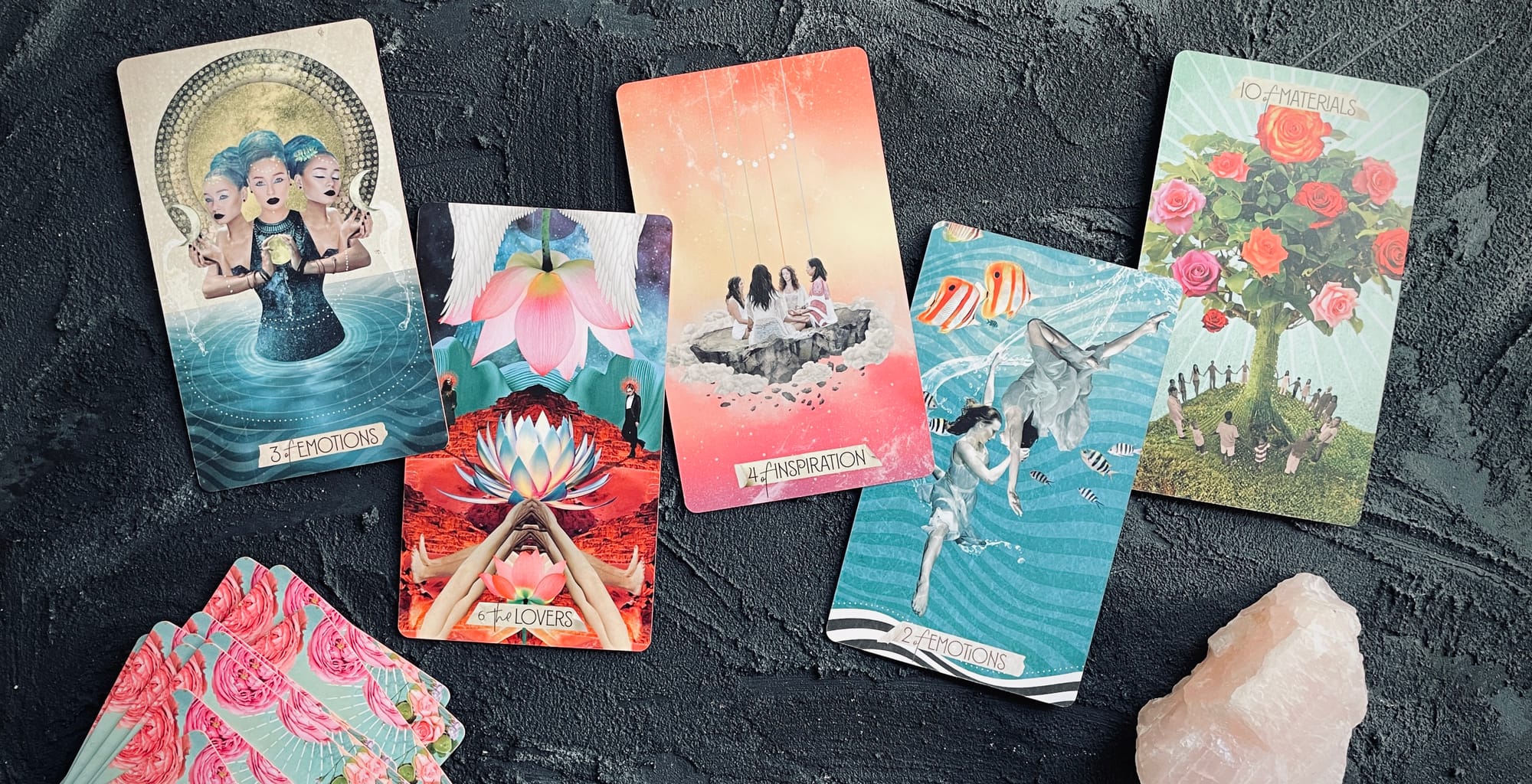
if all of this is getting your mind going, if you're itching to dig more deeply into some of these concepts, i've got a few things for you to try out.
first, an exercise: grab your tarot deck and select three to five archetypes that represent the way you see your deck, generally. these can be major arcana archetypes, or minor arcana court card archetypes, but choose cards that feel like an embodiment of the relationship that you have with your cards, or the things that you're looking to your cards for.
lay your chosen cards out on your reading surface, then consider any or all of the following questions:
why these cards? what do each of them bring to the picture of your relationship with the tarot? how do they each contribute to what you see, hear, and look for within your cards? how do these cards represent roles, desires, expectations, and needs that you might have around the tarot?
what do these cards have in common with each other, if anything? do they all feel true at the same time, or do they feel like different expressions of your relationship with the tarot? what do you love about these cards, and what frustrates or confuses you? which cards do you feel proud to have chosen, and which ones might bring up some sticky or strange emotions?
now, pick just one of those archetypes to represent how you see your cards today, right now, in this particular moment. answer a few more questions about this card specifically:
why this card today? what about this archetype feels the most connected to your current relationship with the tarot? what is your general relationship with this card, and how does it feel to use it to describe your connection to the cards? if you imagine reading your cards, how does it feel similar to an imagined conversation with this archetype, or a visit to their realm?
what does your choice tell you about how you're feeling about your cards these days? what emotions bubble up for you when you acknowledge your relationship with the tarot through the lens of this archetype? is this where you want to be right now with your cards, or is there another card that you wish you'd been able to honestly choose instead?
second, a few new tarot spreads to play with. you can use these spreads in the usual way (aka shuffling your deck, pulling one card at random for each position in the spread, then interpreting these cards as responses to the prompts) — but if you prefer, you can also use them as reflection prompts and journal with them:
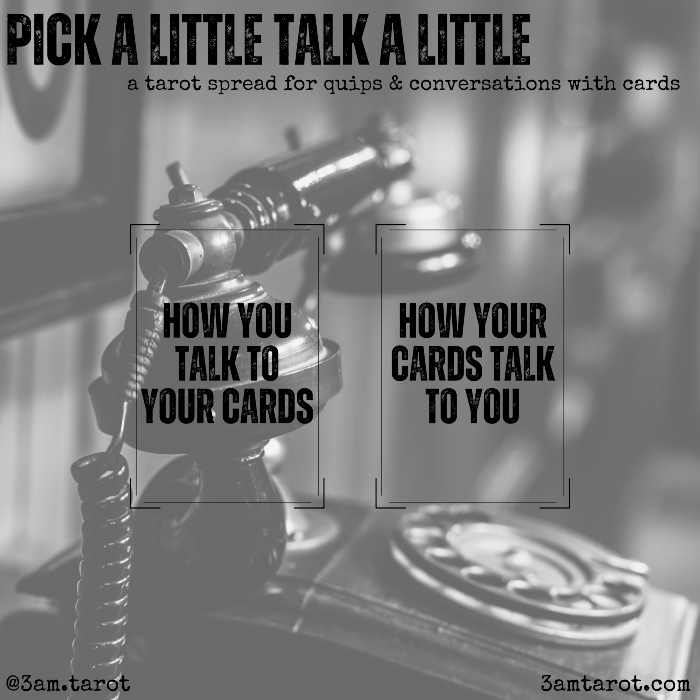
pick a little talk a little: a tarot spread for quips & conversations with cards. what are your conversations and readings with your tarot cards like? how do you engage with them? how do you speak to each other?
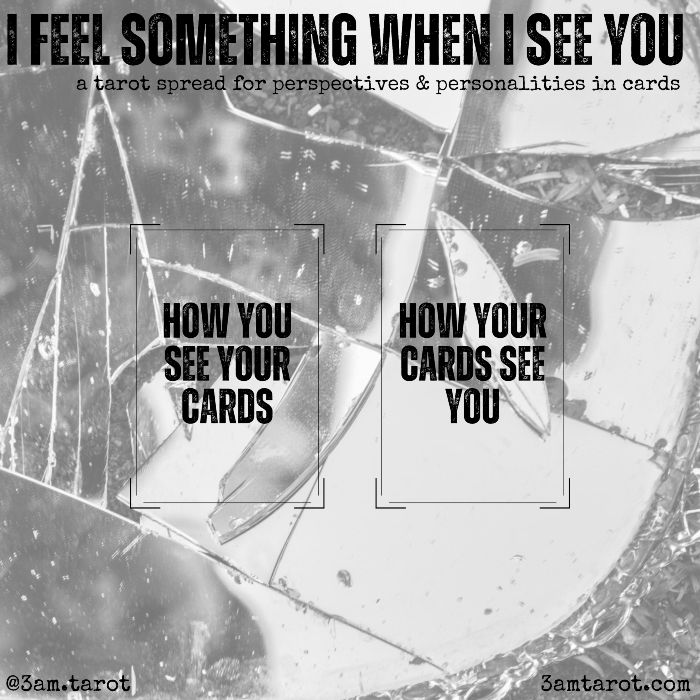
i feel something when i see you: a tarot spread for perspectives & personalities in cards. what do you see when you look at your cards? what do they mean to you? and how do think your cards look at you? how do they understand who you are, and understand your relationship with them?
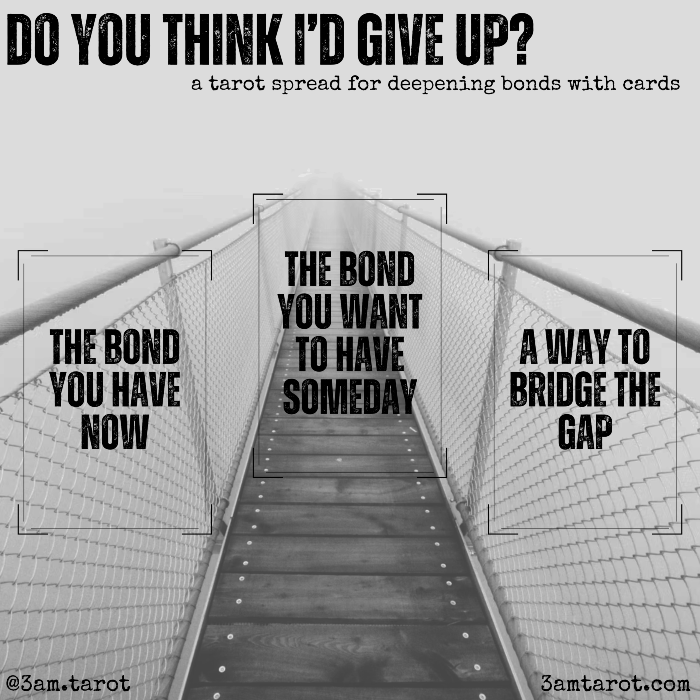
do you think i'd give up? a tarot spread for deepening bonds with cards. what is the nature of your connections with your cards right now, and what do you want it to eventually become? what might you be able to do right now to build the relationship that you want to have with the tarot?
and third, coming soon: a brand new live workshop series that i'll be kicking off in november. each workshop will be available for standalone purchase but will be free to attend for hermitage members, and recordings of the full series will be included in the hermitage. if you've been thinking about getting more intentional about your tarot practice, if you're been hungry for some new ways to engage with your cards, if you're ready to take your tarot readings to the next level, the 3am.tarot hermitage is for you — so stay tuned for more details on this upcoming series, which i am so excited to share with you.
in the meantime, i'll be sharing more thoughts, exercises, tarot spreads, and resources to help you deepen and clarify your relationship with the tarot for the rest of this year, and will be back in your inbox soon with some creative prompts on the ten of cups. sending you love, vulnerability, and care, friends.




Member discussion