
so you're eager to find your flow

hello, friends. over the last few days i've been writing to you about grief: how your cup might be overflowing with heavy emotions, how it feels to be underwater and overwhelmed by grief, and what it means to hover at the surface and get a broader perspective on everything that's happening within.
today, for this final essay in my little grief miniseries, i want to talk about finding our flow and living alongside our grief. and i want to tell you a little bit more about why grief work feels so sacred and central to me — and how my personal work led to my creation of my upcoming river styx ten-week program.
the end goal with grief work, at least the way that i see and do it, is to find your flow with your grief as a companion, or even as a guide. it's about knowing that you're in this together, for better or worse. it's about honoring that your grief is by your side always, and building a relationship with it that works for you both.
if grief is a river, this is the point where we've pushed through the dark depths, spent some time on the surface getting ourselves oriented, and now are moving through the water with intention and support. that's not to say that we'll never find ourselves underwater again, or that we won't need to pause to tread water sometimes. but it is to say that we understand what it means to move in tandem with our grief, instead of constantly fighting against it.
the more time we spend getting to know our grief, practicing listening to it and tending to it, the easier it becomes to care for our grief on a consistent basis, and to let our grief care for us. we build up resilience to discomfort, learn how to sit in uncertainty, and recognize the things that our grief most often needs from us.
and we learn to see ourselves for who we are right now, instead of trying to go back to who we were before we were grieving. we learn to dream of a future that we want to help build, instead of passively accepting whatever might happen to us. we learn to show ourselves deeper patience, deeper compassion, deeper love.
how do i know this? because i've spent a lot of my life underwater.
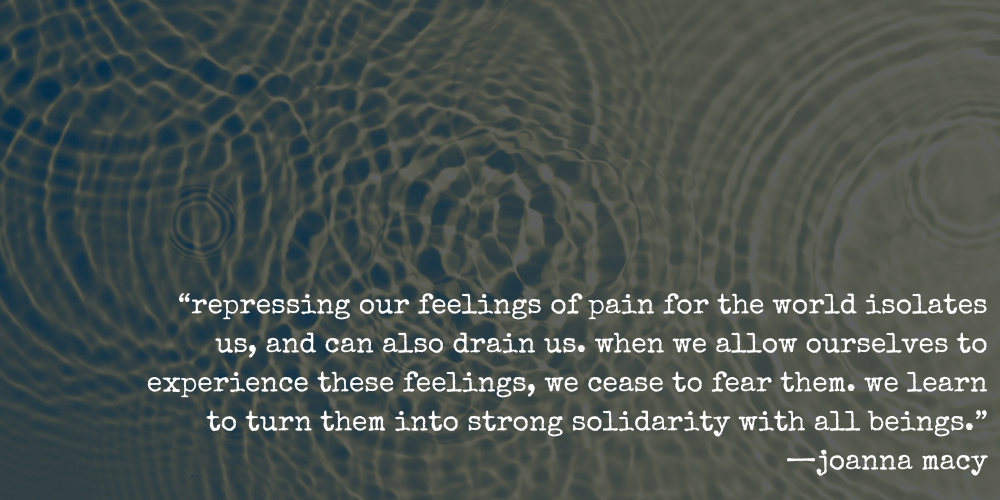
if you've been reading my work for awhile, you might be aware that i was raised in a household that wasn't exactly welcoming of who i am.
a closeted queer kid, taught to hate myself and others like me, who survived by reading books and making music and working backstage. a kid who constantly had to perform being okay, being grateful, being obedient, being the best christian daughter i could be, while feeling endlessly guilty for my own sadness. a kid who grew into an adult with major depressive disorder, who learned very late that my severe insomnia wasn't remotely normal, who barely survived many very dark years of incredible loneliness and deep pain and wishing i wasn't alive.
i didn't really realize how long i'd been grieving until i turned thirty, when i bought my first tarot deck as a spiritual hail mary during another months-long bout of depression. it was 2016, trump was stalking hillary clinton around debate stages, and i was getting a crash course in politics, patriarchy, capitalism, homophobia, and white supremacy. my isolated youth had left me deeply clueless and ignorant, and the more i learned, the more helpless and guilty i felt. i started attending protests, starting volunteering, started educating myself on everything i'd missed, and started digging into anti-racism resources. the tarot helped me slowly figure out what i wanted — and all that i was missing, too.
by my mid-thirties, when my ex-husband and i decided to get a divorce in the first year of the pandemic, it became clear to me that i was absolutely drowning in grief. the heaviness that i'd always attributed to depression, the uncertainty that seemed to define my life, the lack of trust that i had in my own intuition — my grief was bottomless, pitch black, impossible. even as i rebuilt my life, fell in love again, and committed to making 3am.tarot a business that would support me, i was also recognizing how much grief i was carrying: around my childhood, my painful relationships with my natal family, my reluctance to leave painful or abusive situations simply because they were familiar, and so much more.
truly diving into the reality of my grief was terrifying. i was so afraid of the truths i might find, of what my grief was carrying and burying, of what really listening to my grief might reveal about me. i was afraid i wouldn't be strong enough, that it would hurt too much. but i also knew that not dealing with the grief was destroying me from the inside out.
i won't lie, some of the things that i found were heavy. i'm grateful to have an amazing therapist, an amazing wife, amazing friend groups — because grief truly is easier to process and carry with community. but to my surprise, most of the things i found in my grief were actually pretty beautiful. i was always afraid that i was a coward at heart, but in my grief i found the deep reserves of courage and resilience that have kept me alive. i was always afraid that i was too quiet and private, but in my grief i found a wealth of patience and observation that i was proud of. i was always afraid that i was too weak to hold the depth of my emotions, but in my grief i found the groundedness, steadiness, and wisdom that have helped me find strength even in the darkest of moments.
i thought my grief hid the worst of me. i thought i was grieving because i was broken. but my grief was tangled up in my joy, my hope, my laughter, and my magic. letting my grief take up space helped me rediscover the hope and optimism that had been there all along, these beautiful parts of me that i had thought were lost.
listening to my grief set my sense of hope free.
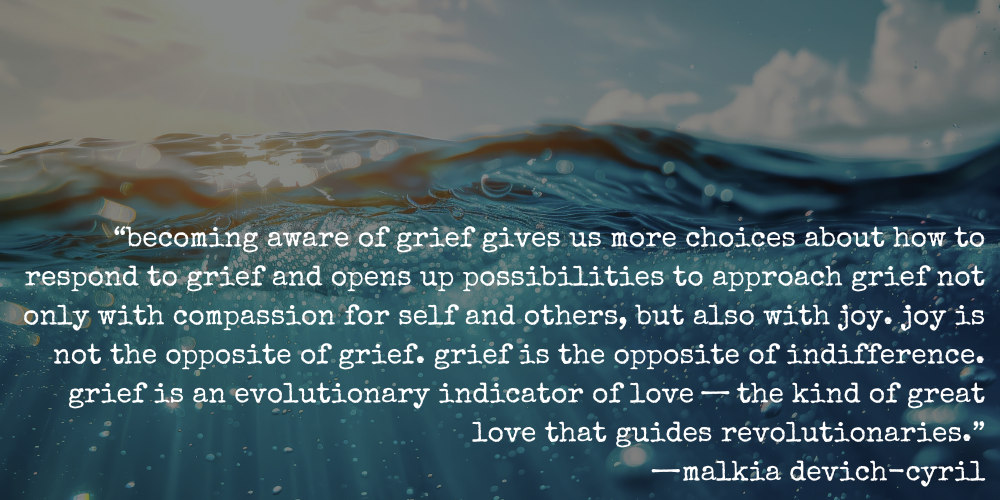
the more space i gave my grief to whisper and whimper, the more it began to feel like music. those quiet sounds became songs, stories, poetry, essays. instead of holding me down in the depths, my grief helped me float to the surface, helped me breathe deep again. and before long we were moving together, paddling those waters in steady tandem, charting new courses together. my writing got braver and more vulnerable, my relationships got deeper and more authentic, and my capacity to show up for what i care about was more expansive than ever.
grief work changed my life — not by changing me, but by helping me see myself clearly, and teaching me to love what i saw.
now, my grief is a constant companion. i cherish my grief for the truths it offers, for the values it reflects, for the depths of emotion that it connects me with. my grief is a reminder that i still care, that i still listen, that i still hope for a bigger, brighter world. my grief means that i'm still alive.
of course, i didn't simply dive into my grief without any kind of structured support or guidance — beyond my therapist and community i also did it with the help of the good grief network, a program developed by founders laura schmidt and aimee lewis reau. these amazingly kind queer women are co-authors of how to live in a chaotic climate, and are also the architects of the ten-step collective grief FLOW framework that i became a certified facilitator for back in 2024. this book, this program, and these women have profoundly inspired me, and helped me understand that collective grief isn't something to fight against — it's something to listen to, to care for, to work with.
completing this grief facilitation training program over the course of twelve intense weeks was a powerful experience. and through it all, i found myself constantly turning to my tarot cards, letting them hold me in challenging moments, looking to them for advice and insights and support when something felt too big to hold or too scary to examine.
the tarot was and is my steadfast companion in both personal and collective grief. the cards helped me tell stories, recognize truths, and honor the authenticity in all that i was doing. by the end of my training, i knew that i wanted to create an affiliate FLOW program using tarot and journaling to support the people in my community: the misfits, the rebels, the people who love tarot and magic and asynchronous resources, the people who see this work as both practical and spiritual.
i knew that i had to create river styx.
so what even is this ten-step framework that river styx is built on? why is it so impactful, so supportive? how can it reactivate hope, build stamina and capacity, help us fully participate in our lives again? and how can you know if it'll work for you?
every step builds on the one that came before — but every step can also be revisited and remembered at any time. we're all different, with our own privileges and our own blind spots, but this framework makes space for everyone to engage with collective grief in the ways that we need. below, our basic themes:
step one: rise to the challenge / accept the severity of the situation
step two: be with uncertainty / practice not knowing
step three: look death in the eye / sit with the reality of mortality
step four: honor personal wounds / do the inner work
step five: own the blind spots / recognize your biases
step six: create connections / practice gratitude & witness beauty
step seven: take breaks & rest / show yourself compassion
step eight: recognize mistakes / grieve the harm you've caused
step nine: show up / note your capacity & your boundaries
step ten: the next right step / invest in meaningful efforts
in river styx, we spend a week on each step — every week, you'll get an email with an audio lesson (and transcript) along with journaling prompts, tarot spreads, somatic exercises, and reflection tools that you can use to explore the step in your own way. we'll have space to discuss in digital community, you'll have accountability tools to help you keep going, and i'll also host three live meetups for additional sharing and support.
what i love about this ten-step framework is that it isn't just about passively acknowledging your biggest, deepest feelings. it's also quite literally about transmuting your grief into meaningful action, consistent engagement, and deep joy. the program itself encourages laughter and connection, rest and compassion, boundaries and intentionality — but it also pushes you to engage with the world, to commit to your values, to not avoid your own blind spots or biases. and it encourages us to do all of this together, in community, instead of trying to muddle through all of it alone.
wanna try it out? as part of the river styx program, you'll get at least one tarot spread for each weekly lesson, corresponding to each of the ten steps. but of course, i couldn't help but write a few more spreads just for y'all, based on a few of the steps that i thought might be helpful for you right this moment.
you can use these new tarot spreads in regular readings just as you would any other spread, or can use them as journaling prompts and conversation starters as i've suggested in previous essays — but you can also intentionally go through your deck and pick out specific cards for each position, as a way of answering the questions for yourself. which cards do you choose, and why? how does it feel to find cards that reflect your feelings, instead of allowing the deck to tell you what it sees?
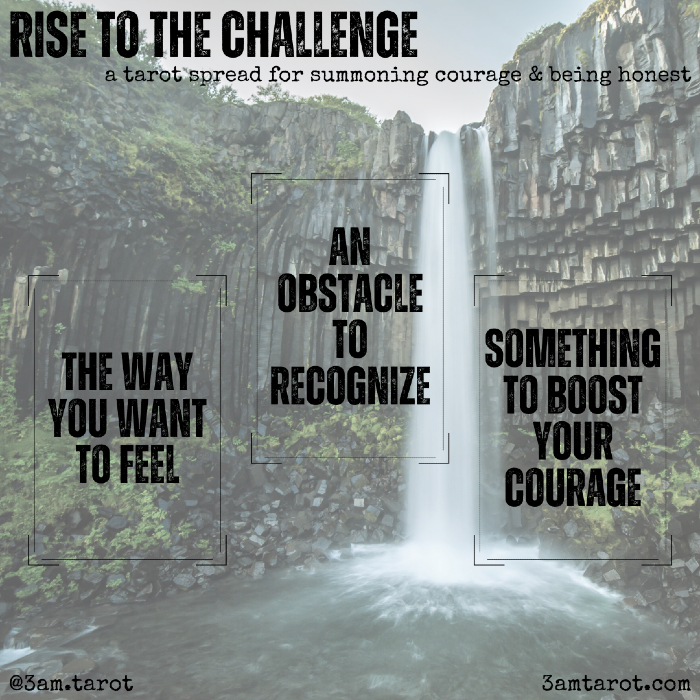
card one / the way you want to feel: a feeling or sensation that you're craving; an example of an emotion you're hungry for; something you want
card two / an obstacle to recognize: something that's blocking the emotion you want; a challenge or stumbling block to feeling the way you want to
card three / something to boost your courage: something to do or remember that can help you get through the obstacle; advice for something you can try right now to feel a little braver
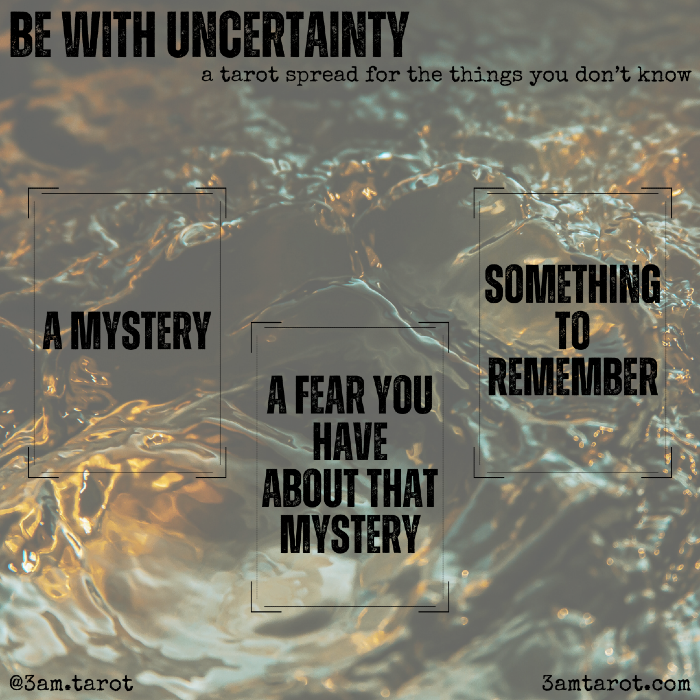
card one / a mystery: an area of uncertainty in your life; something you don't know or don't know everything about
card two / a fear you have about that mystery: something that bothers or upsets you; a worst-case scenario or active fear that's making this challenging
card three / something to remember: a reminder or truth from the tarot; something to help you sit in the uncertainty
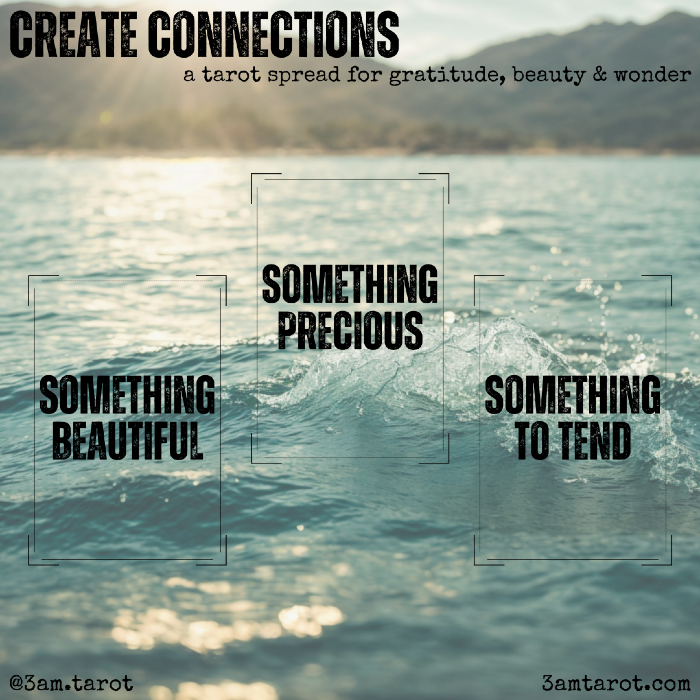
card one / something beautiful: something that gives you pleasure and joy to look at; something pleasing or artistic or lovely or sweet
card two / something precious: something with value and magic; something that you want to cherish and celebrate and protect
card three / something to tend: something worthy of care; something that has space to grow and expand and teach you something wonderful
as you play with these spreads, as you use them for reflection and conversation and discovery, stay open to whatever feelings, truths, and mysteries emerge. how does tarot help you find courage, feel more resilient, or go after what you want to pursue? how does tarot help you see yourself more clearly? what has tarot been teaching you about your grief, and how has that been supporting you these days?
you've reached the end of this final essay in my little grief miniseries. but of course, my words are only the beginning. river styx opens for enrollment tomorrow, january 26th — and to celebrate, i'm hosting a completely free virtual tarot journaling event tomorrow at 7pm EST. if you haven't already snagged your spot, i'd love for you to join us.
and if you want to learn more about river styx, i'd love to remind you:
river styx is for tenderhearted badasses who want to believe in the future again. if you want to learn how to transmute your grief for the world into bold action and fierce hope — without drowning in overwhelm, helplessness, or fear — then this is the program for you.
this is a ten-week, self-paced, resilience-oriented community grief container that includes:
- original audio lessons (including transcripts) delivered straight to your inbox each week, based on the tried-and-true ten-step framework developed by good grief network’s laura schmidt and aimee lewis reau
- recommended tarot cards to work with alongside your lessons, along with new spreads and accessible exercises for tarot readers of any level
- journaling prompts for personal reflection, introspection, and discovery
- suggested somatic exercises to stay grounded, stable, and present
- a library of resources for creating your own personal support plan
- a private digital discord community for sharing, encouragement, and ongoing support
- accountability tools for helping you continue to show up to the work
- three live zoom meetups for checking in and practicing community building
- lifetime access to course content and our co-created grief community
- the flexibility to engage with lessons based on your own schedule and timeline, along with gentle reminders to honor your capacity and personal needs
the program costs $666 or three monthly payments of $222. a higher solidarity rate of $888 is available for participants who are in a financial position to support scholarships for marginalized students.
to celebrate this first cohort of river styx grievers, all participants will also receive a downloadable digital collection of brand new, original tarot spreads. plus, the first four people who sign up will also be able to choose one spread for this collection for me to use in a personalized mini audio tarot reading, as an extra thank you!
join the waitlist now to be notified when the program opens on january 26th — doors close february 5th, and river styx officially begins with the first email lesson on february 6th, 2025.
let’s tend our grieving hearts together.
my hope for you, dear friends, is that you can learn to listen to your heart and your spirit and your magic and your grief, all together. no matter what's next for you, no matter where you find yourself, my hope is that you live with strength, courage, resilience, and above all, hope and joy.
stay safe, stay brave, and hope to see you tomorrow.




Member discussion