
so your cup is overflowing with grief

hello, friends. at the top of this month i wrote about the ace of cups as headwaters and an initiation of movement — not as new water appearing out of nowhere to begin a journey, but instead as water gathering and building the kind of gravitational pull that creates pathways and tributaries, that brings us somewhere different over time.
we often talk about the ace of cups as overflowing — and for most people, this might feel like a really positive experience. we might think about love and friendship, connection and witnessing, being held and celebrated, seeing the magic in everything. the ace of cups can feel wildly optimistic and deeply beautiful, a card of possibility and warmth and abundance. overflowing love, overflowing joy, overflowing opportunity.
but in my own relationship with this card, i tend to see both sides of the coin. yes, that overflowing cup held aloft in the ace can be brimming with beautiful sensations and magical awe. but i tend to see this singular cup as holding the entire spectrum of emotion, the full depth and breadth of the human heart. this cup has it all — not only the most positive, desired emotions that we can carry, but also the challenging ones. the complexities of anger, the sting of loneliness, the dull ache of sorrow. less fun, less sexy to talk about — and yet this too is the experience of aliveness. this too is what it means to be a person in this world, to have relationships with others and with ourselves, to be vulnerable and exploratory and to decide when to take risks with our hearts.
this world can be so heavy, friends. there's no use in pretending that it isn't — and i would actually argue that it’s far more harmful than good to deny the pain, challenge, and grief that's part of the fabric of our reality.
sometimes the heaviness of this world sounds so complicated, especially when we look at it through the broad lenses of history and geopolitics, of commerce and capitalism, of differing viewpoints and blind spots and stubbornness and propaganda and deeply held beliefs. but other times it feels so painfully simple — families being violently separated, people standing up for their neighbors and communities, an offer of food or shelter or clean water. the ways that we can use logic to complicate or separate ourselves from something fall away when we allow water to sweep in, to connect us all.
our hearts ache when we read the news, when we see another video of state violence, when we leave another voice memo for our feckless representatives. our tears fall when we see families separated, people brutalized, innocent humans disappeared out of hatred and fear and abuses of power. the ace of cups has room for all of this.
as lisa olivera shared just a few days ago, there is vulnerability in caring. there is risk in loving. there is potential loss in opening our hearts.
and yet, keeping our hearts soft and open is the only way to live. it's the only way to stay connected. it's the only way to keep showing up and fighting back and taking care and making change. it’s the only way to stay alive.
acknowledging the beauty and pain of this world, recognizing both the power and the pain, lets us stay connected to both our love and our grief, our joy and our sorrow, our longing and our satisfaction.
and this, too, all, is the ace of cups. this, too, all, is water.
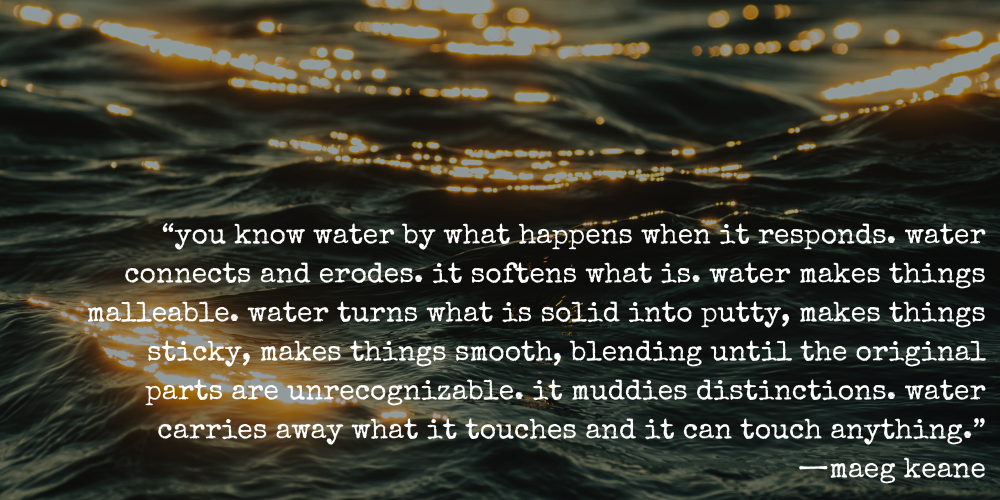
we are all, every one of us who is paying attention to this world, experiencing collective grief. in our shared cups, in our personal cups, in the murky and muddled depths of our spirit, we are overflowing with grief:
grief around climate change. grief around failing economies. grief around fascism. grief around corrupt politicians. grief around state violence. grief around xenophobia and transphobia and homophobia and racism. grief around not being able to access basic needs. grief around genocide. grief around exploitation. grief around a lack of bodily autonomy. grief around AI. grief around lost futures. grief around shattered worldviews. grief around lost trust in systems or people or places. grief around pandemics. grief around never having enough. grief around the things we cannot make time and space for. grief around abandoned dreams. on and on and on — we are grieving, so much, all at once.
and many of us are grieving alone, even if we’re experiencing the same kinds of collective grief. grief has a way of isolating us, of pulling us into the dark waters and leaving us reaching out for something we can't see or hear. yet as in life, grief is everywhere in the tarot, not only in the ace or the five or the eight of cups: we can also find it in the three of swords, the ten of wands, the five of pentacles. grief lives everywhere, finding its way into the cracks and taking many forms — and the more we deny it, the heavier it becomes.
if any of this is resonating, if you constantly feel guilty for how exhausted and overwhelmed you are, listen to me: you're not weak. you're not failing. you're not pathetic or useless or "bad at being a person." you're grieving. and you're not alone.
i know that talking about grief isn't sexy. it's not a topic that most people want to think about — especially in countries like the united states where productivity rules all, where the focus is always on getting back to work or back to normal. we’d rather avoid, downplay, deny, ignore, or fight against our grief than embrace it, listen to it, honor it, or work with it.
grief is the ultimate misfit, the ultimate rebel. grief disrupts. it challenges. it transforms. it is terribly uncomfortable, terribly painful, terribly frightening. it activates deep emotions, difficult sensations, beliefs or anxieties that we otherwise keep hidden. it pushes us to our limits, turns us into people that we might not recognize. it can leave us numb, or desperate, or lost. grief refuses to be ignored, makes itself known, carves out a place for itself within us.
grief has so much to teach us, if we're willing to learn how to listen.
if we want to be fully participating in our lives, if we want to meaningfully shift the collective consciousness, if we want to fight back and deepen connections and celebrate our gifts and change the fucking world, we have to acknowledge the ways that grief is shaping and reshaping us. we have to reckon with the reality of the grief that so many of us are carrying around. we have to let that grief out, let it breathe, let it cry and scream and move through us and carry us somewhere new.
we have to befriend our grief, and let it take up actual space in our lives.
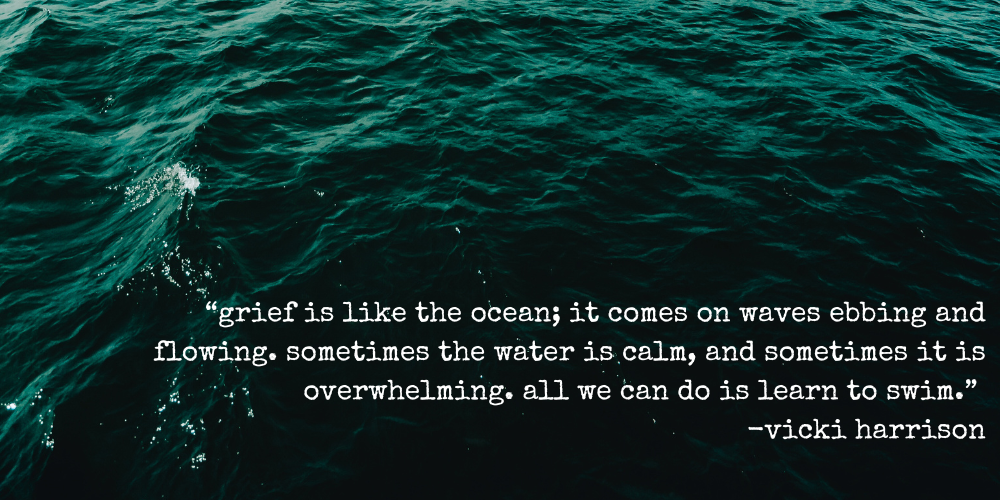
you've probably heard the expression "fill your cup" or tried to grapple with the question "what fills your cup?" and i've used it myself — hell, my wife and i ran a whole workshop around this concept. it can be a useful metaphor, a helpful way to think about the things that replenish and nourish us.
but earlier this month i wrote about the ace of cups as already overflowing, as a vessel that is already brimming with water. i encouraged you to recognize that in the tarot, water is not a finite resource, not something we have to create from nothing. so what's in your cup right now? is it love, community, intimacy? is it artistry, creativity, spirituality? is it hope, faith, dreams? is it vulnerability, wonder, discovery?
or is it emotion? is it longing, sorrow, sadness, a kind of heaviness that you can't seem to move out of? in other words, is your cup filled with grief?
it might not be. i'm not here to make you feel bad if it isn't, or to come after you if you're holding a cup full of a joy, a cup full of optimism, a cup full of wonder.
but if things have been feeling sticky or stagnant for awhile, if you're lost in the news and having trouble finding a sense of momentum or purpose, if you're exhausted and frustrated and weighed down, if you're angry or scared or flailing — well, you might be grieving. grief takes many forms. it can affect us physically, intellectually, creatively, relationally. it can show up in every area of our life, draining the color or the emotion from things that we normally adore.
i can't fix your grief. i actually don’t want to fix it, because i think our collective, shared grief is a beautiful, sacred, tender thing that should be cared for and loved. but i can help to make it feel a little more tangible, a little easier to notice, a little more supportive. especially if your grief is a collective one, a shared one, a grief that seems to live around every corner and in every news story and in every "what's your five year plan" heavy sigh, there are ways to make space for it.
the difficulty of collective grief is that the things that we are grieving are not necessarily going to get better — and reckoning with this fact is an essential part of the work. i cannot individually reverse the climate crisis, or free palestine, or change housing policies, or tax the rich. i don't even know if those are things i'll see in my lifetime. and so the challenges of collective grief are in sitting with the reality of it, learning to befriend it, and finding ways to live with it.
it's hard work. it's not work that everyone wants to take on. but it is work that transforms, that expands, that makes space for so much goodness. when we get to know our grief, when we acknowledge the ways that grief is already here, it lets that grief start to flow and move in new ways.
your grief has a lot to teach you: about what you love, about what you dream about, about what you yearn for. and when we use tools like tarot, like journaling, like somatic movement, like breathwork, and like conversation with fellow grievers, we can learn how to listen to our grief, and to embrace the lessons and wisdom that it has to offer.
this isn't about pouring that cup of grief down the drain. it's not about shoving that cup of grief into a place where you can never find it again. it's instead about holding that cup, honoring that cup, even learning to cherish that cup. and it's about letting that cup expand, so that it can make space for more than your grief. your cup can hold so much — and when you listen to your grief, you’ll find that the hope and joy that you might feel desperate for are already present, tangled up with your grief, waiting for you to see them clearly.
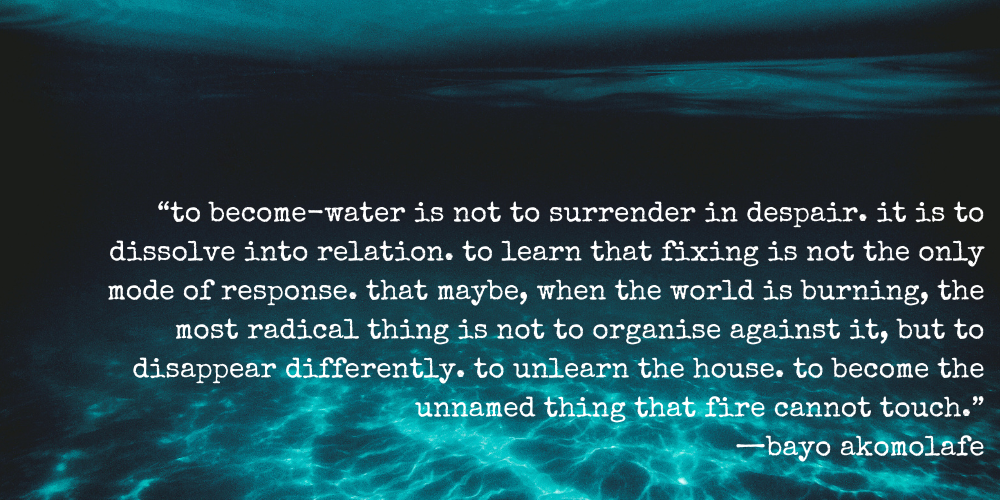
i know grief work can feel scary, intimidating, overwhelming. i know it might seem like if you’re already drowning in pain and anger and sorrow, grief work might make it all worse. but i have found, over and over, that the opposite is true — that when we make space for grief to speak, to whisper, to sing, when we pay attention to what it wants to share with us and what it is desperate to receive, it helps us rise to the surface.
if you don’t believe me yet, that’s absolutely okay. i’m going to be sharing a trio of essays next weekend to help you start wading into the waters of grief with the loving support of the tarot. and if you’d like to try this work out with company, make sure you snag your seat at my completely free virtual tarot journaling event on january 26th at 7pm EST. i’ll talk a bit about grief work and why it’s so relevant right now, we’ll do a short reflection exercise together as a group, i’ll remind you about my upcoming ten-week grief container river styx and the other grief resources i've created, and then we’ll spend 30 minutes journaling and reading cards as individuals. there’s no pressure to share or talk or have your camera on, the event will not be recorded to protect everyone's privacy and vulnerability, plus i’ll email all of the prompts and spreads to you once we’ve wrapped (so even if you aren’t sure you can make it live, feel free to sign up anyway to get those prompts and practices!).
your grief goes hand in hand with love, and joy, and hope. if you’re feeling disconnected from yourself, if you’re numb or overwhelmed all the time, if you are eager to show up for your community but feel too exhausted to even get started, grief work can make a big difference in your resilience, capacity, and courage.
you don’t have to do this alone, friends. let’s wade into the waters of grief together.
sending you love, and courage, and kindness. sending you community support, and resilience, and stamina. sending you clarity, and purpose, and capacity. sending you compassion, and awareness, and collaboration.
we are stronger together, friends — do not forget that. more soon.




Member discussion