
may 2026: five of cups // dams & disappointments

hello, friends. we're making our way through the suit of cups all year long, and if you're new here or haven't been following along, you can check out the whole series right here.
welcome to may and the five of cups, a card that in my experience is often greeted by groans, moans, and deep, full body sighs.
i know this world is rough. i know your attention span might feel like it's at an all-time low. i know that you might feel isolated, overwhelmed, exhausted all the time. and, also, i know that spending time reading, thinking, breathing, reflecting, and observing can genuinely help us feel a bit more grounded, a bit more regulated, a bit more ourselves. i know that sharing thoughts and ideas that are always 100% from my weird human brain and not with AI plagiarism bots is wildly necessary for my own artistic and creative survival. i know that acknowledging the hard things, the fear and the sorrow and the pain and the struggle, is an essential first step in learning to tend our grief. and i know that being here with you, every week, keeps me going.
thank you for being here. thank you for your magic and your brilliance, and for your grief. thank you for using tarot to take care of yourself and your loved ones. thank you for showing up, again and again, to the things that matter.
take a few deep breaths, and let them out slowly. let's talk about the five of cups.
the suit of cups, like each of the four suits in the tarot's minor arcana, tells a story. the ways that we interpret this story, the ways that we understand it and see our circumstances and experiences reflected in it, depends entirely on where we are and who we are in the moments of reading, of reflecting.
and this month, we've reached the middle of that story: a pivot, a change, an opportunity for moving in a new direction. friction, tension, challenges, and revelations — this is a breakthrough moment, an adjustment opportunity, a shudder and a shake and a shift. we're moving from the first half of the story to the second, and this is a strange, liminal transition point.
listen to me: the five of cups doesn't always have to be about the worst breakup of your life, or a devastating disappointment that leaves you gasping for breath, or an endless grief experience that you can't seem to pull yourself out of.
but sometimes it is — and that matters too.
i could've pretty easily written you a whole essay on how this card can be more than just heartache and grief — but the truth is, i want to give you permission to let this card be a little too painful, a little too real, a little too achy. not because i'm trying to rub salt in your wounds, not because i want to hurt you personally, but because the five of cups wants to sit with you in the hurt. it wants to hold your hand in the liminal. it wants to create space for your uncertainty. and it wants to tend your grief, in a way that lets you move with it instead of simply trying to push past it.
and the five of cups can't do its job if we pretend that the hurt isn't there.
whether your latest five of cups moment is as small as getting the ick with somebody you thought you wanted, or it's as big as deep ongoing grief over something or someone you cannot possibly resurrect, it all matters. it's all real. and it all deserves your care, compassion, and attention.
the five of cups is an essential part of the story, even if it's one you don't like very much. but even here, there is medicine. even here, there is something to hold on to.
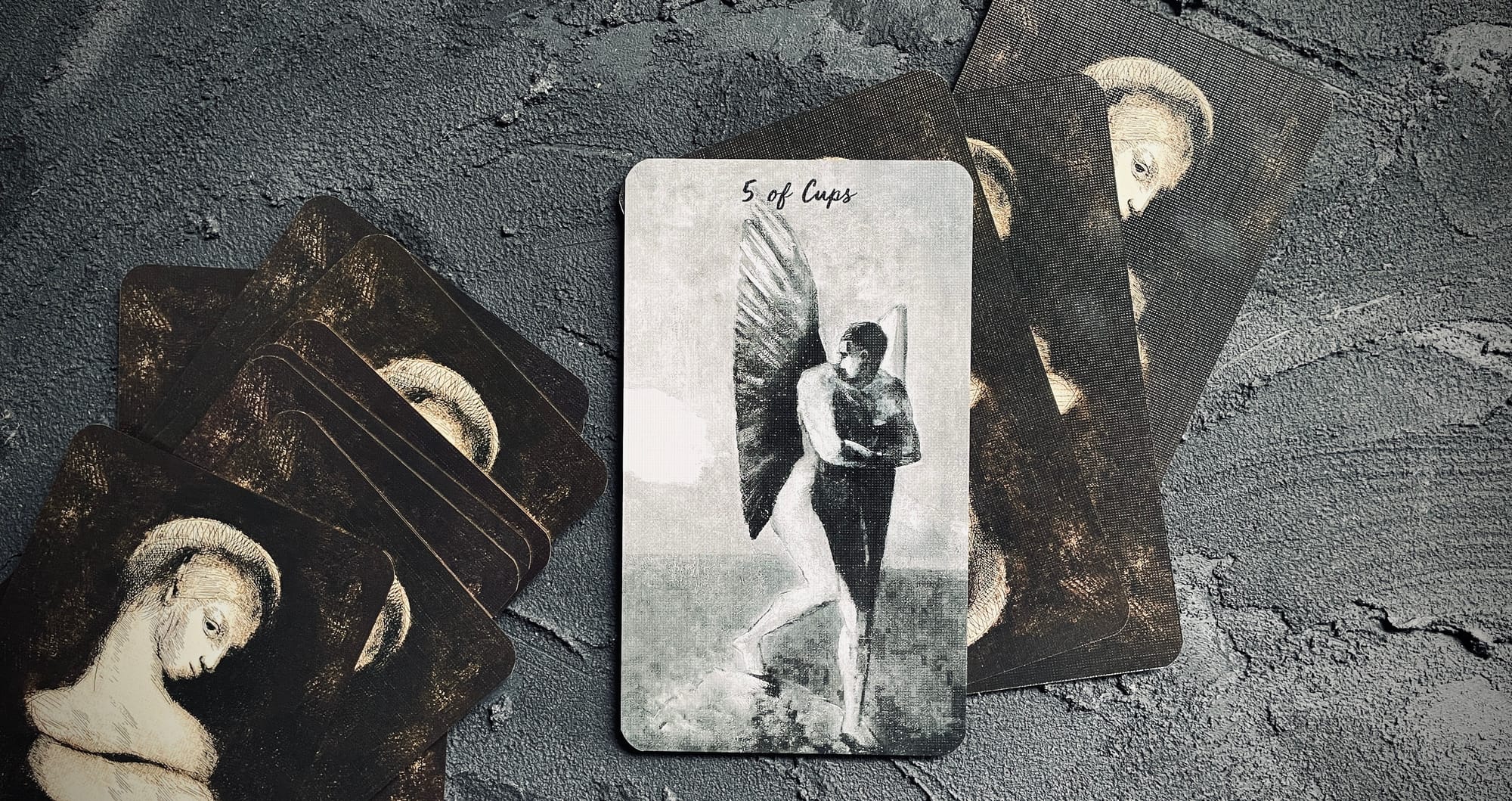
when we talk about the five of cups generally, it's usually connected to loss: losing a relationship, losing a belief, losing love, losing trust. it's sorrow and heartache, mourning and feeling stuck and struggling to process. it's hurt feelings, painful realizations, tender changes, emotional growing pains.
because of this, the five of cups is a card that most often gets associated with heartbreak — and as someone who does a lot of work around grief, who spends a lot of time thinking about grief, who is often the person who says "that sounds like a grief response" in unprompted moments (sorry to nino, who i just did this to the other day) the five of cups is a card i think about, and work with, a lot.
more generally, this is a card of an emotional friction point, a major relational shift, or an intuitive conflict. it's the messy but necessary transition at the center of the suit of cups, when our internal waters and external flows push up against an obstacle or challenge, something that forces us to adjust and regroup and find another way. with the four of cups we created rules and boundaries for our heart's protection — but now with the five, we find ourselves chafing against those restrictions, longing for more freedom and movement and flexibility. longing for more, or for different, but also resenting that we can't hold on to what we are leaving behind.
five of cups moments are almost always times of tenderness, sensitivity, hyperawareness, and contraction. we might find ourselves sinking down into the depths of our own heart-waters — or we might find ourselves getting dragged helplessly through the currents of our own heavy feelings, hoping that things eventually still enough that we can swim again.
these are the kinds of emotional experiences that force us to take stock. fives in the tarot are so much about changes and challenges: change your mind, change your attitude, change your circumstances — but what does it mean to change your heart? what does it mean to witness your heart shifting direction, to acknowledge an adjustment or constriction of dreams, desires, emotions, connections?
the heart wants what the heart wants — and sometimes, that can be a painful realization, one that forces us to walk away from something so that we can walk toward something else. sometimes, the five of cups is a reckoning with self about a longing that we've realized may never be satisfied, or an emotional pain point that we simply have to push through. sometimes, the five of cups forces us to acknowledge that we've been emotionally coasting and we need to make a decision, or make a change, or own up to something we've been reluctant to share. sometimes the five of cups is recognizing that something that used to feel good now feels pretty awful, and we need to move on.
and sometimes, the five of cups is simply disappointment: in ourselves, in a situation, in a lack of something, or in another person.
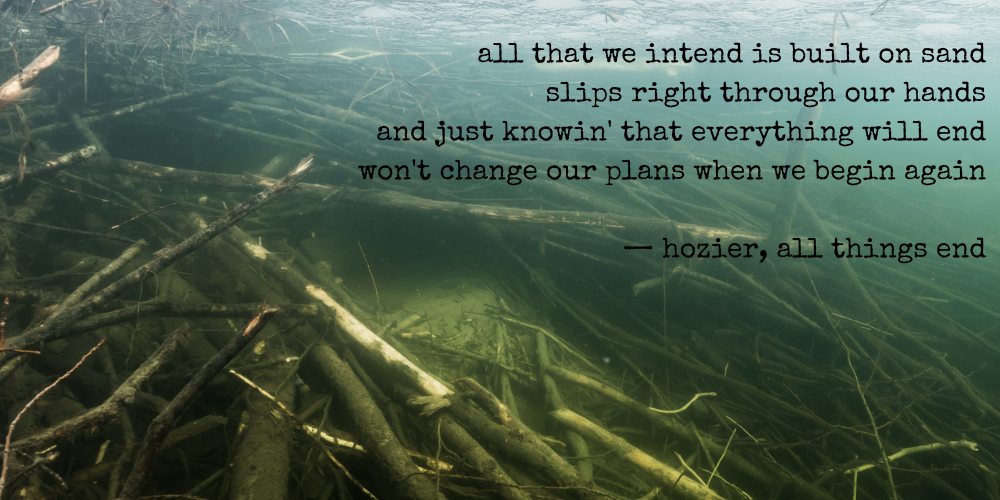
when i think about the five of cups, i think about dams: the manmade ones, sure, but mostly the ones made by beavers. specifically, the ones made by the beavers that i saw most often growing up.
my mother's side of the family is canadian, from ontario — and when i was a kid, we would go up to my grandparents' small, rustic cottage on aylen lake for a week or two each summer. no television, no dishwasher, no telephones (except for the landline that had a different ring for each cabin on the lake), low-to-no water pressure, and endless, beautiful quiet. we'd catch tiny frogs on the little strip of beach, read books in hammocks or in the boathouse when it rained, help complete gigantic puzzles on the folding table, get ice cream cones at the landing dock, stock up on coffee crisp (the best candy bar of all time), and go fishing.
i wasn't ever great at fishing, though i do remember being incredibly proud after catching my first sunfish. but i liked the peacefulness of it, liked that we got to sit in the small speedboat with the motor off and listen to the water lapping on the shore, liked that we got up early before anyone else was awake and the sun was just rising over the trees. but it wasn't unusual for my grandpa to bring us to his favorite cove of the lake for fishing, only to find that the beavers had built a dam seemingly overnight and ruined his plans.
in those moments my grandfather halfheartedly tried to teach me about the importance of beaver dams for the ecosystem — but it was always obvious how deeply irritated he was that his fishing spot was now impossible to get to, that these "rodents" had ruined his plans. we learned early on that it was very important not to laugh at him for this irritation, and that we should instead commiserate that we had to go to a different part of the lake to fish instead. but it was part of the ritual to not only complain about the dam, but then for us to all sit in silence looking at it for awhile, begrudgingly acknowledging the work the beavers had done while also giving my grandpa ample time to get over it.
i wish i had a photo of little meg in their bright yellow lifejacket with a mini fishing pole to show you. pretend it's right here. trust that i was adorable.
the point of this silly little story is not that beaver dams are annoying. (they're not, and beavers are delightful.) the point of the story is that the five of cups is something emotionally gumming up the works, creating a kind of disappointment or friction that feels like a loss. this particular example of my grandpa's minor inconvenience was truly not a big deal, in the scope of things — but it still required adjusting expectations, tending the hurt or disappointment, and making some space to feel so that the rest of the fishing trip would be fun.
a few moments to be annoyed, but then we'd find another cove and get on with our fishing. and by the end of the little trip around the lake, we'd always come back to the cottage with fresh fish and small stories, the beaver's dam becoming something to brag about seeing instead of something to complain about.
the five of cups demands that we be present with what we are feeling, big or small. and while sometimes that sucks, it almost always lets us actually get through the feeling, or learn to walk with it, or witness it change, instead of staying stuck in the purgatory of pretending.

the tarot isn't always a tool that we use to fix something, or figure out our next steps. sometimes it's a mirror that helps us acknowledge that what we're feeling is true, or real, or justified, or okay.
and listen, i know that sometimes that's annoying, or scary, or frustrating. sometimes we don't wanna see our big feelings reflected to us with a literal mourning shroud, and broken cups, and tears and rough waters and all the things that the five of cups' card imagery so often includes. sometimes we just want the tarot to tell us how to solve a problem, or make the hurt go away, or compartmentalize in a way that lets us keep being productive.
but the five of cups, so often, simply whispers "hey babe? what if you just let yourself cry for a bit?" this card wants us to allow ourselves to feel the thing — not because feeling our feelings always feels good, but because refusing to feel the feelings is exhausting. it takes so much energy, and time, and resources, to pretend that we're okay when we're not. and whether we need to cry or yell or collapse into a heap or eat two pints of ice cream or whatever, feelings don't go away just because we've gotten good at ignoring them.
sometimes we have to break down and break open in order to break through. and you can complain that it's inconvenient or the timing is bad or you're "not really a crier" or whatever, but the reality is that we all deal with disappointment sometimes. big ones, little ones, catastrophic ones, mundane ones, personal ones, collective ones — loss, and heartache, and grief, and hurt all come in different ways, all the time. sometimes we can see them coming, other times they catch us by surprise. but if we want to let gold fill in the cracks, if we want to find our way back to ourselves on the other side, we've gotta feel it first.
this is the part of the cups story where we decide if we want to finally cross the river, or if we need to stay by the water and feel things for awhile longer. are we ready to move on to the next fishing cove, or do we need to stare at the unexpected dam for awhile first? are we ready to look forward, or do we need to let ourselves first recognize what we're leaving behind? have we cried enough, or are there more tears that still need to fall?
here's the thing: there's no shame in crying. (it can literally be good for you.) there's no shame in feeling big feelings about our big, broken world. there's no shame in grief, in sorrow, in tenderness. it's deeply human to be disappointed, to feel angst, to need space to process heartbreak or heartache. and, i'll argue, your feelings mean you still care, you still feel, you're still engaging with hope.
those numb people, the ones who complain that "everything is too political" while clinging to their privilege, who refuse to cry or laugh or change or learn or grow, who berate themselves and others about messiness or imperfection or emotion, who cling to an old version of themselves or their relationships or their beliefs and refuse to let go? those are the people i'm worried about.
but you, with your big tender heart and your big tearful eyes and your big sweet regrets? you're doing great.
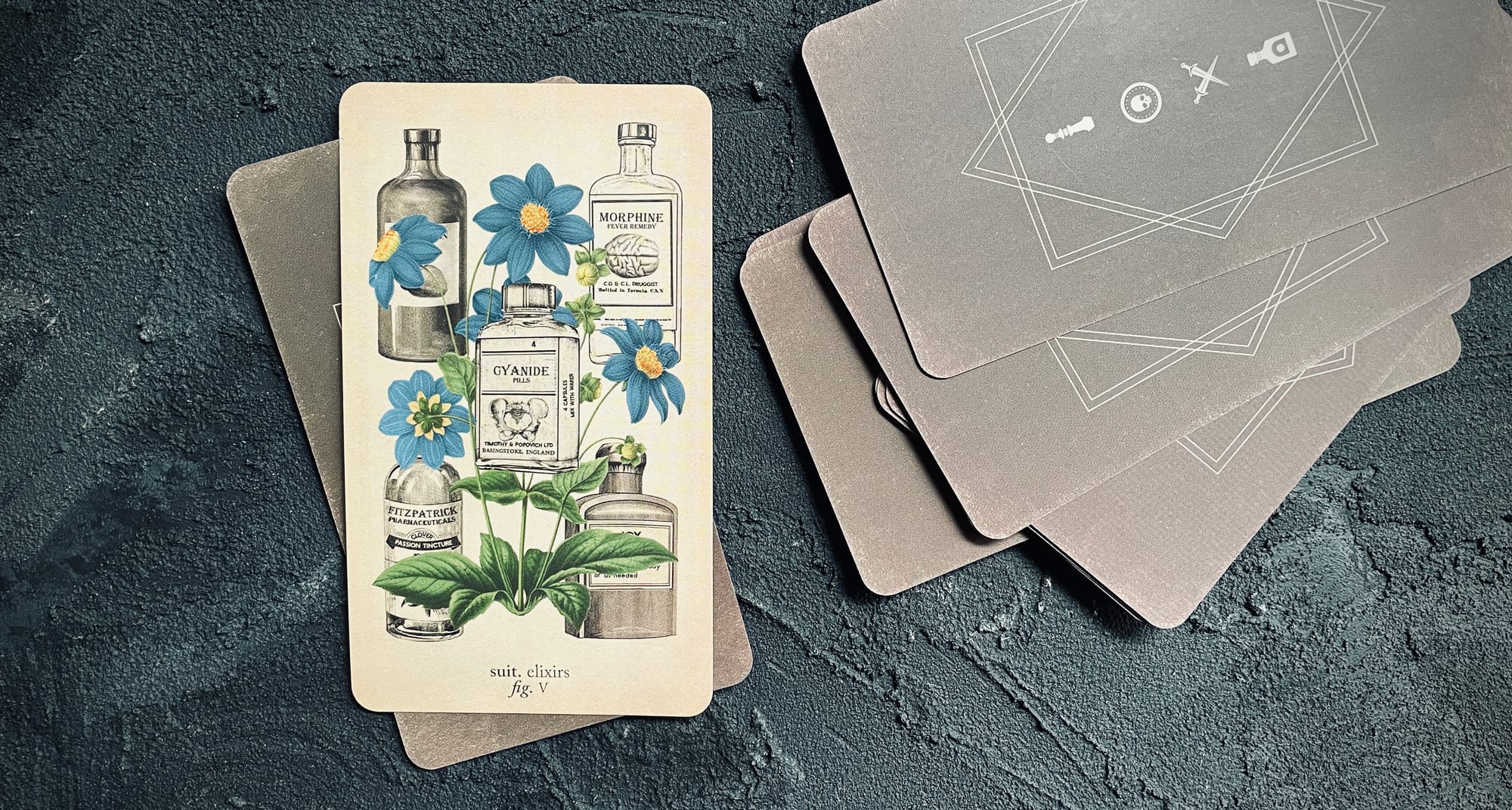
telling yourself that something isn't hard to fix doesn't make it easier to do so. telling yourself that you shouldn't care about someone leaving doesn't mean you magically don't care anymore. telling yourself that you're being too tender or too sensitive or too emotional about a hurtful exchange doesn't make the hurt just disappear. the five of cups wants you to let yourself actually be a little wrecked about your pain, so that you can let your pain breathe, let it move, let it ask for what it wants and needs.
i know it's uncomfortable. i know it sucks sometimes. i know it might be tempting to tell yourself that with empires crumbling around us, with the supreme court back on its tremendous bullshit, with genocidal billionaire pedophiles running the world into the ground, your little hurts aren't really that big a deal. but you're allowed to be a person, friend — and sometimes, that means we have to let something hurt, so that it can start to heal.
as we move into may, as you navigate fresh hurts and old wounds, what would it look like to let yourself actually feel them, express them, be changed by them? what would it mean to stop denying your grief or sorrow or frustration, to listen to those big emotions instead of trying to drown them out? what would it feel like to intentionally shift into the liminal space of emotional discovery, to be curious about your feelings instead of denying them entirely?
what is contracting within you? where is change being demanded, and what emotions are emerging as a result and reaction? and — what's on the other side of this pain? what might acknowledging your grief allow you to move into? where might the waters of your tender feelings take you, when you let yourself move with them instead of fighting against them?
sending you endless love, courage, strength, and compassion, friends.




Member discussion